
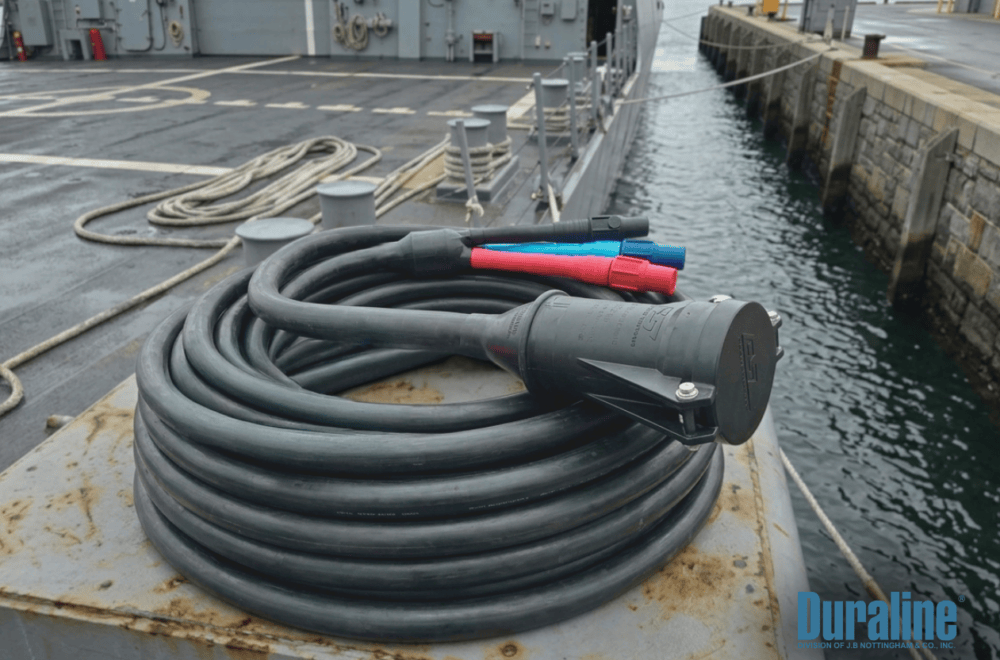
Why Custom Electrical Assemblies Can Reduce the Number of Adapters on a Jobsite
Adapters are useful. In many industrial electrical systems, they’re essential.
A generator may have one connection while the equipment being powered uses another. An older facility may need to interface with newer equipment. Rental equipment can arrive with an unexpected plug, or a temporary project may need to connect electrical systems that were never originally designed to work together.
The problem begins when adapters stop being the exception and become the electrical system itself.
Every additional adapter introduces another component that has to be selected, transported, connected, inspected, maintained, and eventually replaced. For projects with known electrical requirements, a custom assembly can often provide a cleaner approach: build the cable and connections around the application from the beginning.
Every Additional Connection Adds Complexity
Imagine that a piece of equipment needs to operate 100 feet from a distribution panel.
The available cable is only 50 feet long, so another extension is added. The extension doesn’t have the correct output, so an adapter is connected. The equipment uses another connection entirely, requiring one more transition before power finally reaches its destination.
The system may work, but it now contains several additional connections simply because the original components weren’t designed around the actual application.
Each of those points has to be considered during setup and inspection.
A purpose-built assembly can potentially replace several of those components with one cable of the appropriate length and the correct compatible connections at each end.
Start With the Application Instead of the Adapter
A better approach begins by working backward from the equipment.
What power does it require? What is the available source? What connector is already installed at the source? What connector does the equipment require? How far apart will they be? Will the cable operate indoors, outdoors, or in a demanding industrial environment?
Once those requirements are understood, the assembly can be designed around them.
Duraline performs molding, soldering, crimping, assembly, and custom machining at its Florida facility. On-site CNC equipment also allows custom parts, adapters, and housings to be produced when a standard configuration doesn’t satisfy the application.
The goal isn’t necessarily to eliminate every adapter. It’s to eliminate the ones that don’t need to be there.
Custom Cable Lengths Can Eliminate Unnecessary Extensions
Cable length is one of the simplest examples.
Standard cable lengths are convenient until the equipment is consistently farther away than the standard assembly can reach. Crews then begin connecting multiple extensions simply to cover the required distance.
Duraline can manufacture assemblies in different lengths depending on the product and application. Its temporary lighting systems provide a good example: standard configurations are available, but Duraline specifically offers custom designs when the standard length, socket arrangement, or configuration doesn’t satisfy the requirement.
The same design philosophy can be applied throughout an industrial power system.
If the application consistently requires a particular cable length, specifying that requirement when the assembly is built can create a much cleaner installation than repeatedly combining shorter assemblies in the field.
Put the Connections You Need on the Assembly
Length isn’t the only variable.
Custom electrical assemblies can also be built around the connections required at each end.
A pigtail may provide a molded connector on one end and prepared cable for integration with equipment on the other. Other assemblies can combine compatible connector configurations to provide the interface required by the application.
Duraline’s product families include NEMA connections, Multi-Pin connectors, Cam-Type connections, pigtails, receptacles, extensions, and adapters, providing numerous starting points when designing a system.
For specialized applications, Duraline can also develop custom configurations rather than requiring customers to assemble an unnecessarily complicated chain of standard components.
Pigtails Can Create the Connection at the Equipment
Pigtails are particularly useful when equipment itself needs to become part of the connection strategy.
Instead of running an extension to an adapter and then another connection into a machine, an appropriate pigtail can establish the desired connector directly at the equipment interface where the installation permits.
Duraline manufactures pigtails across several product families, including solid-rubber molded assemblies. Its custom process can accommodate different configurations and production quantities when a standard product doesn’t satisfy the requirement.
This becomes especially valuable when multiple pieces of similar equipment need to use the same connection standard.
Instead of adapting each machine differently, compatible pigtails can help establish a repeatable electrical interface.
Spiders Can Be Built Around Where Power Actually Needs to Go
Sometimes the problem isn’t getting power to one piece of equipment. It’s distributing power to several locations.
A spider assembly allows one incoming connection to branch into multiple outputs, making it useful for temporary power, industrial equipment, heating systems, and other applications requiring power at several points.
But even here, configuration matters.
Duraline manufactures molded spider assemblies and custom distribution solutions designed around different connectors and applications. Its broader custom distribution capabilities include molded distribution blocks, multi-gang housings, junction boxes, and specialized cable assemblies.
Instead of adding adapters to every leg after the spider reaches the jobsite, the outputs can be considered while the system is being specified.
That can make the finished assembly much closer to what crews actually need.
NEMA Adapters Still Have an Important Place
None of this means adapters are something to avoid completely.
Duraline offers NEMA and other adapter configurations because real industrial environments aren’t perfectly standardized.
Rental generators arrive. Legacy equipment remains in service. Temporary systems need to interface with permanent infrastructure. One facility standard may need to connect with another.
In those situations, having the correct adapter available can be extremely useful.
The distinction is between an adapter that solves a specific compatibility problem and a collection of adapters compensating for an electrical system that was never configured around its intended use.
If the same adapter combination appears every time equipment is deployed, that may be a sign that the next cable assembly should simply be built with the required connections.
Custom Distribution Panels Can Simplify the System at the Source
The same principle becomes even more powerful at the distribution level.
Duraline designs and manufactures custom portable power distribution panels and related equipment for temporary electrical service. Custom systems can incorporate breakers, weatherproof receptacles, connector banks, specialty enclosures, and other components around the requirements of the application.
Instead of distributing power from a generic panel and then adapting every output downstream, the panel itself can be configured with appropriate connection points for the equipment it is intended to support.
That can reduce complexity across the entire jobsite.
For a large construction project, shipyard, manufacturing facility, utility operation, or industrial maintenance program, designing the right connections into the source can prevent dozens of smaller compatibility problems farther down the system.
Custom Lighting Can Reduce Field Modifications Too
Temporary lighting provides another good example of designing around the job rather than modifying equipment after it arrives.
A worksite may require specific distances between fixtures, longer cable runs, particular connector configurations, or a layout that doesn’t match a standard lighting stringer.
Duraline’s lighting systems can be customized when a standard configuration doesn’t meet the application. Its custom design process supports different layouts and production quantities, while Duraline’s shipyard offerings specifically note that engineers can work with customers on lighting solutions built around their needs.
Instead of connecting several short lighting systems, extension cables, and adapters to reach the desired locations, a purpose-built stringer can be designed around the physical layout from the start.
Custom Doesn’t Have to Mean Starting Over Every Time
One of the most useful advantages appears after the first order.
When Duraline works with a customer to establish a custom configuration, that design can become the reference point for future builds.
The important specifications—such as cable type, cable length, connector combination, molding configuration, identification requirements, distribution layout, or lighting arrangement—can be associated with that established design so the customer doesn’t have to reconstruct the requirement from memory the next time additional equipment is needed.
That becomes especially useful when a project expands.
A customer may initially need ten assemblies for one work area. Months later, another section of the facility may require the same configuration. Later still, a new building, vessel, production line, or project may need additional units based on that original design.
Instead of beginning the engineering conversation from zero, the previous configuration provides an established reference for the next build.
Repeatable Designs Make Future Expansion Easier
This is where customization and standardization actually begin working together.
At first, a custom assembly solves a specific problem.
If that solution works well, it can become the customer’s standard configuration for that application.
Future equipment can then be ordered around the same connector arrangement. Replacement assemblies can match the existing design. Maintenance departments know what they’re supporting, purchasing teams have a clearer reference, and expansion projects can build from equipment already proven in the facility.
This is particularly valuable for organizations with multiple sites or repeated projects.
A contractor who regularly builds similar temporary power systems, for example, doesn’t necessarily need to redesign every cable assembly for every job. An established configuration can provide a starting point, with changes made only where the new project actually requires them.
Fewer Components Can Mean Easier Maintenance
Reducing unnecessary adapters isn’t just about making the installation look cleaner.
Every additional component becomes another item that crews have to:
select → transport → install → inspect → store → maintain → replace
A purpose-built assembly can reduce that component count.
Fewer unnecessary transitions can also make troubleshooting more straightforward. Instead of tracing power through several intermediate adapters and extensions, maintenance personnel can work with a more direct connection between the source, distribution equipment, and load.
That doesn’t eliminate inspection or maintenance requirements, but it can make the system easier to understand and manage.
When Should You Use an Adapter Instead?
Custom equipment isn’t automatically the correct solution for every situation.
If an unusual connection will only be needed once, an appropriate adapter may be considerably more practical.
Adapters are also valuable when dealing with rental equipment, emergency situations, temporary compatibility problems, legacy systems, or equipment that frequently moves between facilities with different standards.
Custom assemblies become especially compelling when a configuration is:
repeated frequently, deployed for long periods, used across multiple pieces of equipment, or expected to become part of an organization’s normal electrical infrastructure.
That’s when eliminating repeated adapters begins providing the greatest operational benefit.
Design the Electrical System Around the Job
Industrial electrical systems become complicated very quickly when every compatibility problem is solved only after equipment reaches the field.
Sometimes an adapter is exactly the right answer.
Other times, the better question is:
Why are we adapting this connection every single time?
Duraline’s in-house manufacturing capabilities allow customers to approach the problem differently. Custom cable lengths, connector combinations, pigtails, molded assemblies, spiders, distribution equipment, adapters, and lighting systems can be configured around the actual requirements of the application. Duraline’s Florida facility performs molding, soldering, crimping, assembly, machining, and custom work on site.
Once an effective configuration has been established, that design can also provide a repeatable reference for future orders and expansion.
Build It for the Application the First Time
If your crews routinely arrive at a jobsite carrying multiple adapters simply to connect the same equipment they used on the last project, it may be worth looking at the system differently.
Start with the source. Identify the equipment. Determine the required cable type and length. Establish the connections at each end. Consider where power needs to branch and where lighting or distribution will be located.
Then build the assembly around those requirements.
Duraline can work with customers to develop custom cable assemblies, molded pigtails, spiders, NEMA and specialized adapters, distribution panels, connector combinations, and temporary lighting systems designed around the way the equipment will actually be used. Duraline’s current custom offerings specifically include portable panels, specialty enclosures, molded distribution blocks, multi-gang housings, junction boxes, and X-Power cable assemblies.
And when that custom configuration becomes the solution you want to use again, its established design can make future builds and expansions considerably easier to reference.
Contact the Duraline sales team at 386-873-2990 to discuss your application and determine whether a purpose-built electrical assembly can replace some of the adapters, extensions, and unnecessary connection points currently being used on your jobsite.