
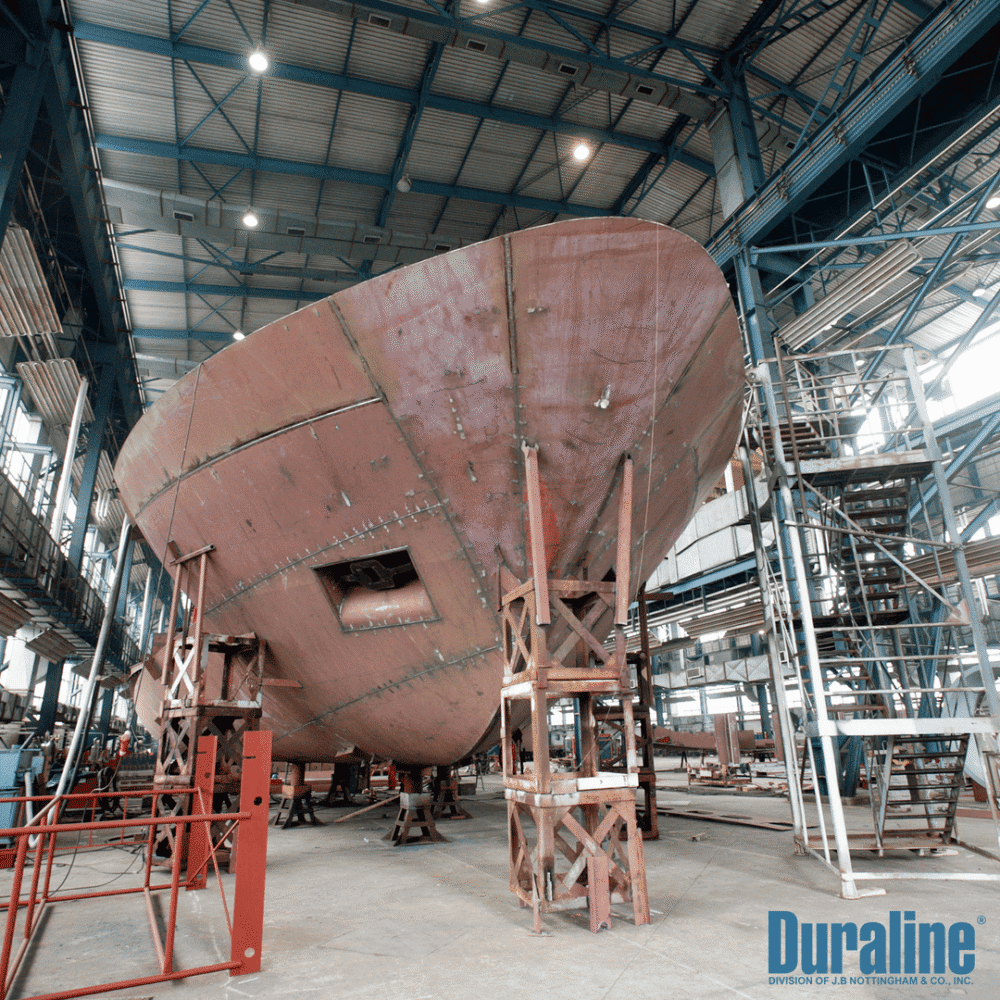
Temporary Power for Shipyards: What Electrical Equipment Does a Shipyard Actually Need?
Shipyards present an unusual challenge for temporary electrical power. A vessel may be connected to shore power while welding, fabrication, repair, maintenance, and other operations are happening simultaneously throughout the ship and surrounding work areas.
Unlike a conventional building, those power requirements continually change as vessels arrive, repairs progress, and crews move from one work area to another. Electrical equipment therefore needs to provide more than capacity alone. It must also be durable, adaptable, serviceable, and capable of supporting demanding marine and industrial operations simultaneously.
Building an effective shipyard electrical system starts with understanding the different jobs that temporary power needs to perform—and selecting equipment designed around those requirements.
Ship-to-Shore Power Starts With the Connection
One of the most recognizable electrical requirements in a shipyard is supplying power from shore to a docked vessel.
Duraline’s Single Pole Cam-Type Connectors are designed for high-amperage power applications, including Navy ship-to-shore systems. The product family includes E1017, E1022, E1023, field-attachable, polarized, and THOF configurations, with Duraline’s high-power line offering connectors rated up to 690 amperes continuous and 600 volts AC/DC depending on configuration.
These connectors use a positive latching design intended to create a secure electrical connection while still allowing crews to disconnect the system without specialized tools. Duraline’s ship-to-shore products are designed around the vibration, repeated connection cycles, and demanding conditions associated with marine environments.
Duraline states that its Navy Shore Power Single Pole Cam-Type Connectors have been used for supplying three-phase power to ships at dockside for more than 50 years.
Organizing High-Amperage Power With Multi-Gang Blocks
Getting power to the vessel is only part of the challenge. Shipyards also need practical ways to organize multiple high-amperage connections.
Duraline’s Single Pole Multi-Gang Blocks, Housings and Assemblies allow multiple single-pole Cam-Type connectors to be grouped together to form phase banks. Configurations can be molded to DLO cable or designed with stud or tapped-hole connections for lugs.
For shipyards, this provides a way to turn individual high-current connections into a more organized power distribution arrangement.
Duraline also manufactures many of these housings at approximately a 30-degree angle, helping make connections easier while allowing rain to move away from the contacts. Because shipyard requirements vary, these assemblies are custom-built around the needs of the application.
That customization becomes especially useful when designing pier power or shore-power infrastructure around an existing facility rather than trying to force a standard distribution product into every location.
Welding Creates Its Own Power Requirements
Supplying general electrical power isn’t the only concern inside a shipyard. Welding and fabrication are fundamental parts of ship construction and repair, and certain welding applications require carefully controlled heating before or after the weld itself.
Duraline’s Welding Preheat Treating Systems are designed for preheating, post-heating, and stress-relief applications and have been used in industrial welding applications—including shipbuilding—for more than 80 years.
Preheating reduces the temperature difference between the welding arc and base material. This can slow the weld cooling rate and lower hydrogen, helping reduce the risk of cracking and potential weld failure. Depending on the material and service requirements, preheat or post-weld heat treatment may also be required to achieve the desired weld integrity.
For shipyards performing fabrication, structural work, and repair, having a controlled electrical resistance heating system gives welding teams a purpose-built method for managing these thermal requirements.
Adapting Heat Treatment to the Work
Shipbuilding rarely involves identical components repeated in convenient locations. A heating system may need to accommodate different structures, material thicknesses, and repair areas throughout a vessel.
Duraline’s welding preheat family includes mini preheat systems, four-wire heat-treating systems, thermostatic and non-thermostatic strip heater assemblies, and individual strip heaters. The modular systems can be expanded or reduced by adding or removing components according to the size of the job.
Duraline’s systems are designed for heating sections ranging from approximately 1/2 inch through 7 inches thick, while offering reusable components and application engineering support.
That adaptability is valuable in a shipyard where today’s welding requirement may look very different from tomorrow’s.
Maintaining Shipyard Power Cables Without Replacing the Entire Assembly
Heavy-duty electrical cables in a shipyard lead a difficult life.
They may be repeatedly deployed, stored, moved along piers, connected to different vessels, and exposed to demanding marine and industrial conditions. Eventually, a connector or cable termination may require service even though much of the cable assembly remains usable.
That’s where having the ability to perform connector work in the shipyard can become particularly valuable.
Duraline’s Vulcanizing Press and Assembly Components are specifically designed around the demands of naval and marine shipyards. The equipment allows appropriate Duraline single-pole connectors and protective sleeves to be molded onto compatible cable.
Rather than treating every damaged termination as a reason to discard an entire length of heavy cable, properly equipped facilities can maintain compatible assemblies using the appropriate procedures, tooling, and components.
What Does a Shipyard Need for Vulcanizing?
Vulcanizing is more involved than simply attaching a replacement connector in the field, so the proper equipment matters.
We suggest a vulcanizing press, come-a-long, vulcanizing tape, copper shims, spray lubricant, and connector maintenance kit among the equipment used for the process. A crimping tool and Chemlok are also need for completing the vulcanizing process with the press, but must be purchased separately.
The Duraline A300106-series Vulcanizing Press is manufactured in Florida using aluminum, steel, and brass components and operates from a standard 110V AC source. Its temperature is factory-set within the range used for vulcanizing materials such as Neoprene and Hypalon.
Custom bushings are available to accommodate different cable requirements, giving shipyard maintenance teams another way to support the cable assemblies used throughout their facility.
Why Repairability Matters in a Shipyard
For an operation maintaining a significant inventory of high-amperage cables, repairability becomes part of the larger temporary-power strategy.
A shipyard may have molded assemblies for normal service, field-attachable connectors for situations where rapid replacement is appropriate, and vulcanizing equipment for more extensive cable and connector maintenance.
That gives maintenance teams options.
Instead of designing a power system around equipment that is simply discarded when something goes wrong, facilities can consider how connectors, cable assemblies, replacement components, and repair equipment will be supported throughout their service life.
For a shipyard operating continuously across multiple vessels and projects, that can be just as important as choosing the original connector.
Building a Complete Shipyard Power System
The important point is that none of these products operates completely independently.
Single-pole connectors provide the high-amperage connection. Multi-gang blocks and housings help organize those connections into usable distribution arrangements. Welding preheat systems support specialized fabrication and repair work. Vulcanizing equipment gives properly equipped maintenance teams a way to support compatible cable and connector assemblies.
Together, they become parts of a larger electrical infrastructure designed around how a shipyard actually works.
Duraline’s shipyard product portfolio extends beyond these four categories as well. Temporary lighting systems are another major part of its marine offering, providing illumination for temporary and transitional work areas throughout shipbuilding and repair operations.
The goal isn’t simply getting electricity onto a vessel. It’s creating an electrical system capable of supporting the many different crews and operations working around it.
Build a Shipyard Power System Around Your Operation
Every shipyard has different electrical requirements. Pier layouts, vessels, available service, welding operations, cable inventories, and maintenance capabilities all influence which equipment makes sense.
Duraline has supplied ship-to-shore electrical equipment to naval and commercial shipbuilding applications for decades, with products designed around high-amperage power distribution, welding support, cable maintenance, and demanding marine environments.
Whether you’re establishing a new shore-power connection, replacing aging Cam-Type connectors, designing custom multi-gang distribution, expanding welding preheat capabilities, or bringing cable vulcanization and maintenance capabilities into your facility, the system should be designed around the way your shipyard actually operates.
Contact the Duraline sales team at 386-873-2990 to discuss your shipyard’s requirements and determine which connectors, distribution assemblies, welding systems, and maintenance equipment fit your application.