
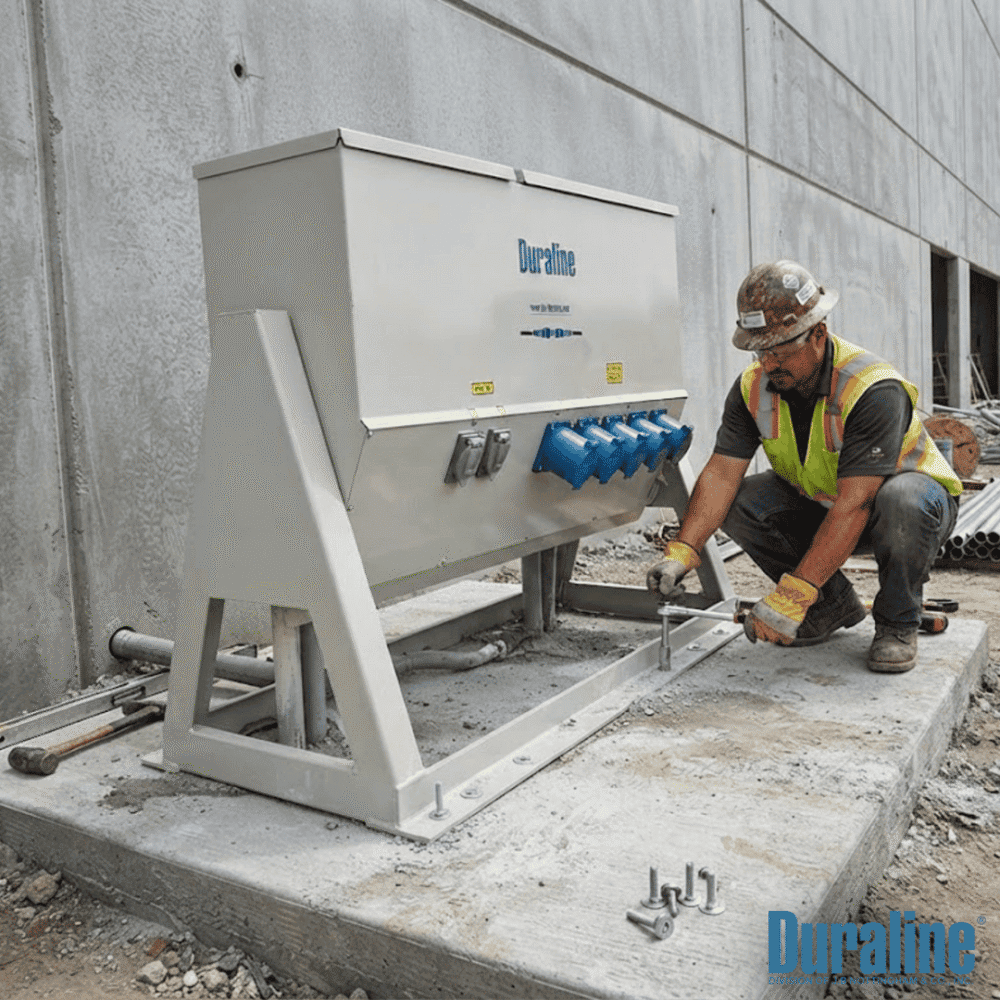
When Temporary Power Becomes Permanent
Temporary power is supposed to be temporary—but anyone who has worked around construction, shipyards, manufacturing facilities, utilities, or industrial maintenance knows that isn’t always how projects evolve.
A temporary electrical system may begin as a solution for construction, maintenance, an equipment upgrade, or an expanding work area. Months later, that same area may still require power. In other situations, the equipment connected to the temporary system becomes part of the facility’s normal operations.
When that happens, the question changes from “How do we get power here today?” to “How should we support this equipment over the long term?”
Why Temporary Power Systems Often Outlive the Original Project
Industrial facilities rarely remain static. Production equipment moves, buildings expand, maintenance requirements change, and previously unused areas become active workspaces.
A temporary power distribution system provides flexibility while those changes are taking place. Instead of immediately committing to extensive permanent electrical work, temporary cables, distribution equipment, lighting, and connectors can help establish power where it is needed.
Eventually, however, repeatedly extending or modifying a temporary system may no longer be the best approach. If equipment or a work area has become a lasting part of the operation, it may be time to evaluate how portions of that electrical infrastructure should transition into a long-term installation.
The Connector Can Become the Interface
One advantage of designing a temporary power system carefully from the beginning is that the connection itself can remain useful as the installation evolves.
Duraline’s waterproof multi-pin connector family includes 2-, 3-, 4-, 5-, and 6-wire configurations as well as larger 8-, 10-, 12-, 14-, and 16-pin connectors. Duraline also offers plugs, receptacles, adapters, and related assemblies across the product family.
This creates opportunities to establish durable connection points between portable equipment and fixed electrical infrastructure.
For example, a receptacle can provide the fixed connection point while a cable-mounted plug allows compatible equipment to be connected or removed as required. The exact arrangement should always be designed around the electrical requirements and applicable codes of the installation.
Using Pigtails to Bridge Portable and Fixed Equipment
Pigtail assemblies are particularly useful when connecting different portions of an electrical system.
Rather than having a connector at both ends of an extension, a pigtail provides a molded connector with a length of cable that can be integrated into an appropriate piece of equipment or electrical system.
Duraline offers pigtail configurations throughout portions of its multi-pin product line. For example, its waterproof 3-wire pigtails can be supplied molded to heavy-duty SOOW cable, while other multi-pin families provide corresponding receptacle and extension configurations.
That gives engineers and electrical professionals more options when designing the transition between portable equipment and fixed infrastructure.
NEMA Connections Offer Another Familiar Option
Not every application requires a specialized multi-pin connection. Many industrial facilities already use standardized NEMA configurations throughout their electrical infrastructure.
Duraline’s NEMA Style Plugs, Connectors and Receptacles include 5-15, weatherproof 5-15, 5-20, L14-20, L21-20, and L21-30 configurations. Several of these families are available as pigtails and extensions assembled to heavy-duty SOOW cable.
Locking configurations such as L14-20 and L21-20 can also provide a secure connection for industrial applications where accidental disconnection is a concern.
This makes NEMA-style assemblies another practical option when planning connections between equipment and established electrical infrastructure.
Planning Replacement Connectors Before You Need Them
Long-term electrical planning isn’t only about installation. It’s also about serviceability.
Equipment operating in construction, marine, manufacturing, mining, utility, and other industrial environments will eventually experience wear. Even rugged electrical equipment should be routinely inspected, and damaged components should be removed from service when necessary.
For facilities using the same connector family across multiple pieces of equipment, keeping replacement assemblies available can simplify maintenance.
Instead of waiting until a damaged connection creates downtime, purchasing multiple compatible replacement pigtails, plugs, receptacles, or cable assemblies can provide maintenance teams with ready-to-install replacements.
This becomes increasingly valuable as a facility standardizes around a particular connector configuration.
Standardization Can Simplify the Entire Facility
There is another advantage to purchasing connectors as part of a broader system rather than one at a time: standardization.
If similar machines, lighting systems, portable equipment, and distribution systems use compatible connections, maintenance personnel have fewer connector types to identify and fewer replacement components to stock.
Duraline’s multi-pin line covers configurations ranging from relatively simple two-wire connections through 8-to-16-pin assemblies, while its NEMA product line provides several familiar industrial connection standards.
For a facility planning multiple installations, discussing anticipated replacement quantities and future expansion at the beginning of the project can therefore be just as important as specifying the first connector.
Distribution Panels Can Evolve With the Facility
The same principle extends beyond connectors.
Duraline offers distribution blocks and panels designed to bring multiple electrical connections together into an organized distribution system. Duraline’s product range includes weatherproof/watertight GFCI distribution blocks and panels, cords, portable outlet boxes, and related power distribution equipment.
A distribution system initially selected for a project or temporary work area may reveal exactly what the facility needs over the longer term: where power is required, how many circuits are necessary, what equipment will be connected, and which connector configurations work best.
When a temporary arrangement becomes an ongoing operational requirement, Duraline can work with the customer on distribution equipment configured around that application.
Fixed Receptacles Create Purpose-Built Connection Points
Another way temporary equipment can influence permanent infrastructure is through fixed receptacle locations.
Duraline’s product families include cable-mounted connectors as well as receptacle configurations. For example, portions of the multi-pin line include female receptacles designed to pair with compatible molded plugs.
Instead of continually routing temporary cable back to a distant source, an appropriately engineered installation can establish connection points closer to where compatible equipment is actually used.
This can be particularly useful in facilities where equipment needs to remain removable or interchangeable even though the electrical infrastructure supporting it is intended for long-term service.
Temporary Doesn’t Have to Mean Disposable
One of the larger lessons is that temporary electrical equipment doesn’t necessarily need to be treated as disposable infrastructure.
Choosing rugged connectors, heavy-duty cable assemblies, compatible receptacles, and appropriately designed distribution equipment can give a facility more options as its needs change.
A system originally purchased to solve an immediate problem may eventually help determine the architecture of a longer-term solution.
The important step is recognizing when that transition has occurred—and having qualified electrical professionals evaluate what should remain portable, what should become fixed, and what changes are required for the installation to meet applicable electrical codes, listings, and site requirements.
Plan for Today—and What Comes After
If a temporary power system has become part of your everyday operation, it may be time to look beyond another extension cord or one-off replacement.
Duraline can help customers evaluate waterproof multi-pin connectors, NEMA pigtails and receptacles, replacement cable assemblies, fixed connection points, and power distribution solutions that support both current requirements and future expansion.
For facilities standardizing multiple pieces of equipment, our sales team can also help identify compatible configurations and discuss quantities for replacement connectors and assemblies—so maintenance teams aren’t waiting for a critical connection after equipment is already down.
Explore Duraline Multi-Pin Connectors
Explore Duraline NEMA Connectors and Pigtails
Contact the Duraline sales team at 386-873-2990 to discuss your application and build an electrical connection and distribution system designed not only for the project you’re working on today, but for how that equipment may be used tomorrow.